
 Golden Retriever Puppies Vet Chaos: What Really Happens When a Litter Visits the Vet
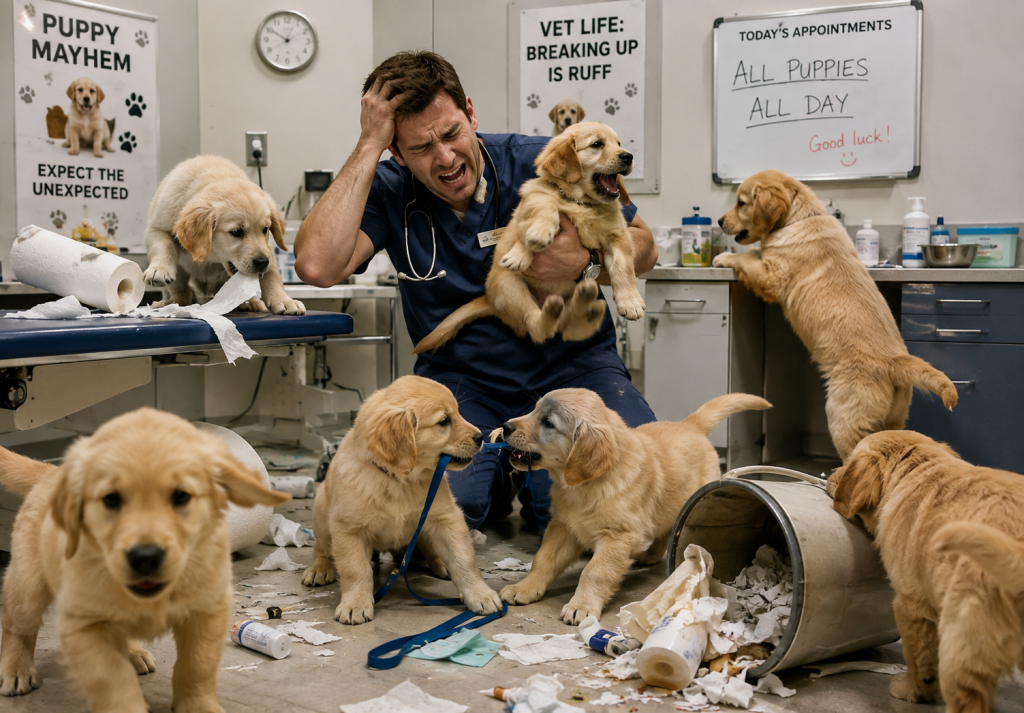
If you have ever wondered what happens when a group of Golden Retriever puppies visits the veterinarian, the answer is simple: adorable chaos. A room full of fluffy Golden puppies can quickly turn an ordinary veterinary appointment into a whirlwind of wagging tails, playful chewing, curious sniffing, and nonstop puppy energy.
The phrase “golden retriever puppies vet chaos” has become especially fitting for viral puppy-vet moments, where several young Goldens arrive together for examinations and vaccinations. In one widely shared example, eight Golden Retriever puppies explored the examination room, chewed safe-looking items, and turned their appointment into an unexpectedly entertaining scene.
But behind all the cuteness, veterinary visits are an important part of responsible Golden Retriever puppy care. A puppy’s first veterinary appointments help establish a health baseline, review vaccination needs, check for parasites, monitor growth, and give new owners an opportunity to ask important questions.
Why Golden Retriever Puppies Create So Much Vet Chaos
Golden Retriever puppies are naturally curious, social, energetic, and eager to explore. A veterinary clinic provides a completely new environment filled with unfamiliar smells, sounds, people, equipment, and textures.
Instead of sitting quietly on the examination table, puppies may want to investigate everything around them.
One puppy may sniff the floor while another tries to chew a towel. A third might attempt to climb into a lap, while another decides that the examination table is the perfect place for a wrestling match.
This behavior does not necessarily mean that the puppies are badly behaved. Young puppies are still learning how to interact with unfamiliar environments.
Their curiosity can actually be useful when handled correctly because positive experiences with new places, people, and gentle handling can contribute to better socialization.
A Real Example of Golden Retriever Puppies Vet Chaos
The internet has produced several memorable examples of large Golden Retriever litters visiting veterinary clinics.
In September 2025, a video featuring eight Golden Retriever puppies visiting a veterinarian was described as “pure chaos.” The puppies explored the examination room, investigated objects, and played with paper products while their tails continued wagging.
Another viral example involved a wagon carrying 12 Golden Retriever puppies to the veterinarian for their first round of vaccinations. The wagon helped transport the large group safely and efficiently instead of trying to control every puppy individually on a leash.
These moments are funny to watch, but they also highlight an important reality: taking care of an entire litter requires preparation.
What Happens During a Golden Retriever Puppy Vet Visit?
A puppy’s veterinary appointment can include several important health checks.
Physical Examination
The veterinarian will generally examine the puppy from nose to tail. Depending on the puppy’s age and medical history, the examination may include checking the eyes, ears, mouth, skin, coat, heart, lungs, abdomen, joints, and overall body condition.
Weight and growth should also be monitored because Golden Retrievers are a large breed and appropriate growth is an important part of long-term health.
Vaccination Review
Vaccination schedules depend on the puppy’s age, previous vaccinations, location, lifestyle, and veterinarian’s recommendations.
Rather than assuming every Golden Retriever puppy needs exactly the same schedule, owners should bring all available medical records to the appointment and follow the veterinarian’s vaccination plan.
Parasite Checks
Puppies can be exposed to intestinal parasites and other health concerns. A veterinarian may recommend deworming, fecal testing, flea and tick prevention, or other preventive care based on the puppy’s age and circumstances.
Nutrition Discussion
Golden Retriever puppies have specific nutritional needs because they are growing rapidly.
Veterinary guidance is particularly valuable when selecting a diet designed for large-breed puppies. PetMD notes that Golden Retriever puppies are generally fed a high-quality large-breed puppy formula until approximately 12–18 months, depending on veterinary advice.
How to Prepare Golden Retriever Puppies for the Vet
A little preparation can make a huge difference.
1. Schedule the Appointment Early
Before bringing a new puppy home, it is smart to arrange the first veterinary appointment. Virginia Tech’s Veterinary Teaching Hospital recommends setting up the first veterinary visit before bringing the puppy home.
This gives you time to gather records and prepare questions.
2. Bring Medical Records
If you purchased or adopted your puppy, bring vaccination, deworming, microchip, health examination, and other available records.
A responsible breeder should provide appropriate veterinary documentation. The Golden Retriever Club of America notes that puppies should typically receive a veterinary examination before going to their new homes, with initial vaccination and parasite-related care addressed as appropriate.
3. Use a Safe Carrier or Transport Method
A very young puppy should not simply be allowed to wander through a busy parking lot or veterinary lobby.
For multiple puppies, a secure, appropriately sized carrier or clean transport wagon may be considerably easier to manage. The famous 12-puppy veterinary visit demonstrated how a wagon could make transporting a large litter much more manageable.
4. Bring Familiar Items
A small blanket or familiar item can sometimes make an unfamiliar environment feel less intimidating.
However, avoid bringing anything that could create a choking hazard or interfere with the examination.
5. Ask About Socialization
Your veterinarian can help you understand how to safely expose your puppy to new people, sounds, environments, and experiences while also considering infectious-disease risks.
Socialization is not simply about meeting every dog possible. It is about helping puppies develop confidence through controlled, positive experiences.
Why Puppies Chew Everything at the Vet
One of the funniest parts of golden retriever puppies vet chaos is watching puppies investigate everything with their mouths.
Chewing is normal puppy behavior. Golden Retrievers are especially enthusiastic about exploring objects, and teething can make chewing even more noticeable.
A puppy may decide that a paper towel, blanket, cardboard box, or other object is the most exciting thing in the room.
This is why veterinary clinics need to keep potentially dangerous objects away from curious puppies.
At home, owners should also puppy-proof their living spaces by securing electrical cords, medications, cleaning products, small objects, and anything else that could be swallowed.
Virginia Tech specifically warns that puppies are naturally curious and easily distracted and recommends puppy-proofing the home before bringing a puppy home.
Golden Retriever Puppy Energy Is Not Bad Behavior
It is easy to look at a chaotic veterinary visit and think the puppies are being naughty.
In reality, much of what people call “bad behavior” is simply immature puppy behavior.
A young Golden Retriever may not yet understand:
- Why it needs to sit still
- Why strangers are touching its ears or paws
- Why it cannot chew everything
- Why its siblings are being examined
- Why it has to wait
- Why the veterinarian is holding a stethoscope
Training takes time.
Short, positive training sessions at home can teach useful behaviors such as sitting, waiting, coming when called, and accepting gentle handling.
Turning Vet Visits Into Positive Experiences
One of the best long-term goals is helping your Golden Retriever associate veterinary care with positive experiences.
Reward calm behavior with appropriate treats when your veterinarian approves. Practice gently touching your puppy’s paws, ears, mouth area, and body at home. Keep sessions short and relaxed.
You can also practice walking into unfamiliar environments and calmly observing new sights and sounds.
The goal is not to force a puppy to tolerate everything immediately. Instead, gradually introduce new experiences while keeping them manageable and positive.
What Golden Retriever Puppy Owners Should Ask the Vet
Your first few appointments are excellent opportunities to ask questions.
Consider discussing:
Diet and Feeding
Ask how much food your puppy should receive, how frequently to feed, and which large-breed puppy food is appropriate.
Golden Retriever puppies commonly need several meals throughout the day rather than simply eating like an adult dog.
Vaccination Schedule
Ask which vaccines your puppy has already received and when the next doses are due.
Parasite Prevention
Ask about intestinal parasites, fleas, ticks, heartworm prevention, and appropriate testing.
Exercise
Golden Retrievers are energetic dogs, but puppies still need age-appropriate activity. Ask your veterinarian how much exercise is suitable for your puppy’s current age and development.
Training and Socialization
Your veterinarian can recommend puppy classes, trainers, and safe socialization strategies.
Spaying or Neutering
If you plan to spay or neuter your puppy, ask your veterinarian about appropriate timing based on the individual dog.
Why Responsible Breeders Take Puppies to the Vet
Veterinary care should begin before a puppy reaches its forever home.
Responsible breeders prioritize health examinations, preventive care, appropriate records, and transparency with puppy buyers.
The Golden Retriever Club of America recommends asking breeders whether puppies are examined by a veterinarian before going home and whether the breeder can provide appropriate health documentation.
A good breeder should also be willing to answer questions about the puppy’s parents, health history, veterinary care, and ongoing support.
Golden Retriever Puppies Vet Chaos Is Actually a Good Reminder
The funniest puppy-vet videos are entertaining because they show Golden Retrievers doing what they do best: being curious, affectionate, playful, and energetic.
But there is a serious lesson behind the chaos.
Veterinary visits are not optional extras. They are an essential part of raising a healthy puppy.
From physical examinations and vaccination planning to nutrition, parasite prevention, training, and socialization, regular veterinary care helps owners make informed decisions as their puppies grow.
A room full of Golden Retriever puppies may look completely out of control, but with preparation, patience, and professional veterinary guidance, even the wildest puppy appointment can become a positive learning experience.
Frequently Asked Questions About Golden Retriever Puppies Vet Chaos
How old should a Golden Retriever puppy be for its first vet visit?
Your veterinarian can recommend the appropriate timing based on the puppy’s age, health history, vaccination status, and circumstances. It is generally wise to arrange the first appointment soon after bringing a puppy home, rather than waiting until a problem develops. Virginia Tech recommends setting up the first veterinary appointment before bringing a puppy home.
Why do Golden Retriever puppies act crazy at the vet?
Puppies are naturally curious and easily distracted. A veterinary clinic contains unfamiliar smells, people, sounds, and objects, so young Goldens may become extremely excited and exploratory.
Can several Golden Retriever puppies visit the vet together?
Yes, veterinary clinics can see multiple puppies from the same litter, but the clinic should determine the safest and most practical way to handle them. Large litters may require careful transportation and organization.
What should I bring to a puppy vet appointment?
Bring vaccination and health records, information about your puppy’s food, details about medications or parasite prevention, and a list of questions you want to ask.
Is puppy chaos normal?
Some excitement, chewing, wiggling, sniffing, and playful behavior is normal for young puppies. However, significant fear, lethargy, illness, pain, or unusual behavior should be discussed with a veterinarian.
Final Thoughts
Golden Retriever puppies vet chaos may sound like a funny search term, but it represents a very real part of puppy ownership. A group of fluffy Golden Retrievers can turn an ordinary examination room into a scene of wagging tails and endless curiosity.
The good news is that puppy energy is part of what makes Golden Retrievers such beloved companions. With responsible veterinary care, proper nutrition, safe socialization, consistent training, and plenty of patience, those chaotic little puppies can grow into confident, healthy adult dogs.
The next time you see a video of Golden Retriever puppies taking over a veterinary clinic, enjoy the adorable chaos—but remember that behind every wagging tail is a young dog receiving care that can help set the foundation for a healthy life.